
Every construction project is not created equal. That’s true for many different aspects of construction management, but particularly when it comes to subcontractor coordination.
For each individual project you manage, there are different specs, owners, schedules, and reporting requirements, and that variability compounds across active jobs. When subcontractors are inefficiently managed from project to project, your construction business will experience coordination breakdowns that set projects back and ultimately tighten your profit margins.
Subcontractors don’t work in a vacuum; it’s a coordinated effort. Subs are often relying on each other’s ability to get their tasks done in a timely manner, and when that doesn’t happen, project performance suffers greatly. The right subs need to see the right information at the right time, but achieving that reality is where many construction managers are falling behind. The answer lies in one crucial element.
The key to effectively managing subs and team members across different construction projects is operational visibility: that means as the project manager, you need the ability to track and manage different subs, specs, owners, and schedules while allowing your subs to view their respective responsibilities. This ensures your team is connected, on-time, on-task, and running efficiently.
In this article, you’ll learn why visibility in construction operations is crucial for successful sub management in today’s market, the common breakdowns that occur when visibility is lacking, and practical ways to build operational visibility into your business.
Where Subcontractor Coordination Breaks Down
Subs can only perform as good as the info they are working from. They need a clear picture of what their responsibilities are, when relevant tasks are due, and what items need attention so that project progress isn’t on hold.
When there's no organized way to communicate goals, priorities, and schedule details, confusion builds quickly. And because subs rely on each other to finish their respective tasks on time, that confusion spreads—one sub's missed deadline becomes another sub's blocked task.
Here are the areas in which subcontractor coordination breaks down and subsequently erodes your profits when visibility is lacking:
-
Subs always seem to be confused about their responsibilities and other relevant details.
Because no one has a clear understanding of their responsibilities, subs ask repetitive questions that should be easily accessible to them, and no one seems to know exactly what they should be doing from week to week.
You hear things like, “When was that change order due again?” “What are our priorities for this week?” “When were we supposed to get that done?”
Confusion takes over where clarity should lead.
-
The project manager has no easy way of tracking subs’ progress.
When there is no simplified, visible way for you to track subs’ progress, it’s harder to hold the right people accountable and check how progress is going. Instead, you end up asking unnecessary questions and chasing answers just to find the information you need.
You can’t see your team’s progress from day to day without physically being in the field, which is less efficient for someone with as many responsibilities as yourself.
Let’s face it; as the project manager, you’re expected to be everywhere at once, keeping your finger on the pulse of every project aspect. That expectation becomes impossible to uphold when you don’t have a streamlined way of managing your subs and ensuring they are on-task.
-
Projects consistently run behind schedule.
When none of your subs have a clear picture of what they should be doing, deadlines are consistently missed and schedule slippage becomes the norm.
Drywall installation can't begin until electrical rough-in has been inspected, which puts the whole operation behind schedule. It’s like an airplane runway; all of the planes have to be coordinated and take off on time so that everyone else can stay on schedule.
When just one of your subs lacks clarity on their responsibilities, it affects everyone else, leaving you to take most of the blame and the profit loss.
-
The project manager wastes a lot of time managing individuals instead of managing the project.
Sub coordination is the responsibility of the project manager. That means when there’s no clarity in your sub management process, you waste a lot of time managing low-level details instead of the higher level project details you should be focused on.
As the project manager, your responsibilities run from budget oversight to milestone tracking to stakeholder communication. Doing any of that well requires the time and attention that gets consumed by sub coordination problems.
You’re so busy managing other people’s jobs that you can’t do your actual job.
The visibility gap creates confusion, but the cost is straightforward: margin erosion. Sub coordination is the connective tissue of most construction operations—when it falters, everything downstream suffers. Your subs need a clear picture of their responsibilities so your operations are efficient and productive, and that’s what operational visibility provides.
How Operational Visibility Improves Subcontractor Management
Operational visibility gives your subs a simple way of viewing all relevant project tasks and responsibilities from day to day and week to week. This way, they are more equipped to stay on task and on schedule, and you can reclaim lost time previously spent picking up the slack.
The most profitable construction companies know how to manage subcontractors effectively, even when project conditions look different. That means no matter how many subs you hire or how complex the project may be, each sub has a clear game plan of what they should be doing.
In previous articles, we discussed how the construction project landscape is shifting towards more variety in the type of work builders are taking on, which means thriving in these market conditions requires improving business operations such as sub coordination. Managing subs is one operational aspect that variability tests the most, and visibility is crucial for adapting to these changing conditions.
Here’s how improving operational visibility among your subs can increase your team’s productivity and subsequently protect your profits in every project:
-
Subs Always Know Their Tasks & Responsibilities
When visibility is a priority, every sub knows what they need to know, when they need to know it. Subs can view relevant tasks and responsibilities without having to search high and low and ask repetitive questions.
No more overdue change orders that should’ve been completed last week, or unaddressed RFIs that are holding up project progress. Now, tasks are more likely to get completed on time because no one is left in the dark.
-
Projects Consistently Run On Schedule
When all your subs have an accessible way of viewing upcoming tasks and priorities, more tasks get done in a timely manner so your projects consistently run on schedule.
No more projects being held up because a sub didn’t finish their work on time. Because operational visibility allows your team to operate at higher efficiency, you are fully equipped to finish more projects on time.
-
Everyone Stays on Task and in Their Lanes
Because operational visibility ensures all subs know exactly what they should be prioritizing day to day, you as the project manager no longer have to worry about managing individuals and low level details that weren’t your responsibility to begin with.
Now, the overall operation can run like a well-oiled machine because each individual part is doing its respective job.
-
You Can Track Subs’ Progress With Ease
Operational visibility isn’t just about giving your subs what they need to be productive; it should also give you the ability to track your team’s daily progress without too much hassle.
With the right tools, you can always ensure things are moving according to the schedule, so you finish more projects on time.
-
You Can Better Protect Your Margins
When your subs and your team are more efficient and productive, your projects become more profitable. In today’s construction market, companies are experiencing more success by streamlining construction operations such as subcontractor coordination.
Better connected construction operations, including how you manage your subs, ensures you can keep the margin on the work you’re already doing. Bottom line: you stop paying for delays and errors that shouldn’t happen in the first place.
The simple fact is when no one knows what they’re supposed to know when they’re supposed to know it, they can’t efficiently do their job. But when your sub management operations are fueled by visibility instead of hidden, disconnected information, your construction projects run smoothly and become more productive.
The argument doesn't matter unless it actually gets applied. The contractors pulling ahead in today's market have built operational visibility into how they work—not as a one-time effort, but as a sustained discipline. That’s the gap most businesses still need to close.
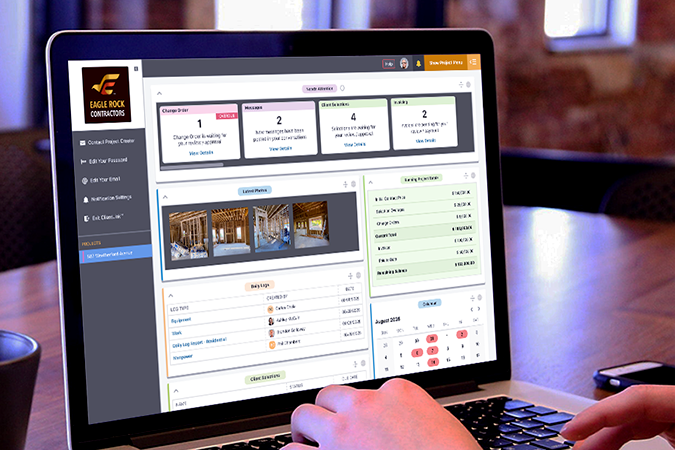
Achieving Operational Visibility in Your Construction Business
In today’s construction market, investing in technology like construction project management software is the best way to improve operational visibility and increase your team’s productivity.
In a recent Dodge Construction Network, contractors who adopted project management software reported major benefits in their business operations:
- More than 50% of contractors experience improved communication and collaboration.
- 90% agree the software has enabled their teams to manage more capital projects.
- 76% report that project delays are reduced by 5 days or more on average.
- More than half of contractors see improved productivity and operational efficiency.
The facts speak for themselves. Implementing technological solutions into your construction business is a requirement if you want to succeed in the current age of construction. Centralized, connected project management platforms allow you to increase visibility and productivity. That means you keep more of your margins and stop losing profits due to inefficiently run teams.
Here’s how integrated, user-friendly construction software can help your business achieve maximum visibility and productivity:
- Your subs can view all of their upcoming and overdue tasks in one, centralized place.
- Subs always know what needs attention with built-in notification systems (email, text, and in-app notifications) that are automatically sent.
- Accountability and transparency are increased among your team now that the project manager can view who is responsible for what.
Construction management platforms like ConstructionOnline – the #1 rated software in the industry — were built specifically to help construction pros manage their subs, team members, and employees with ease and efficiency. With tools like TeamLink Logins (subcontractor portals), GamePlan Task List Reminders, daily logging, insurance and certification tracking, and more, your team can be better connected than ever before, so they can perform at peak productivity.
To see how ConstructionOnline handles sub coordination in one place, schedule a free demo with a product specialist below: